
“Training Council” – Routes Into Law, And Our Teams
Solicitor (LPC Route)
Before the introduction of the Solicitors Qualifiying Exam (SQE) on 1st September 2021 this was the usual way to qualify as a solicitor. This route is only now possible for candidates who were already on their way to becoming a solicitor when the SQE was introduced; meaning anyone already studying or training can continue to qualify through the LPC route, or alternatively, you can choose to do the SQE. Below is a summary of the route to qualification via the LPC route.
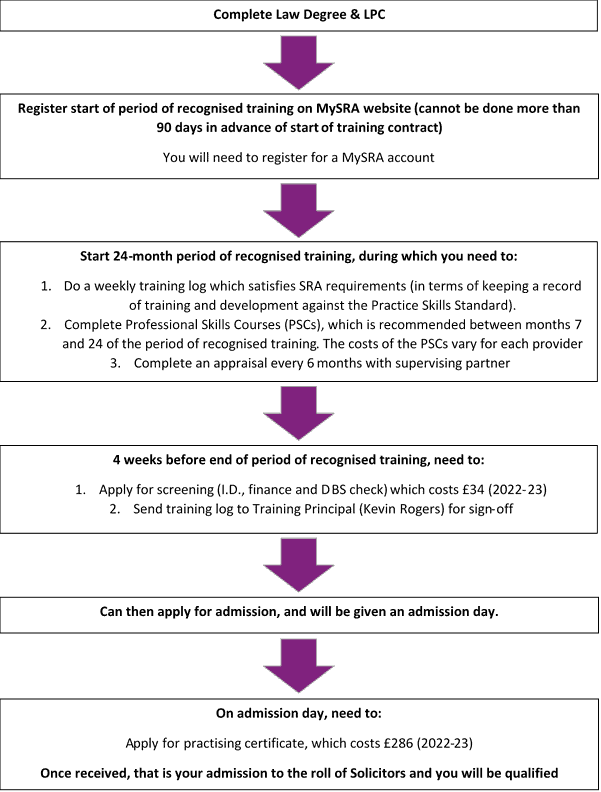
As a Trainee, you have a number of different responsibilities, one of which is to keep a log of your training and the skills that you pick up along the way.
The SRA requirements state that each Trainee must maintain a record of training which:
- contains details of the work performed;
- records how the trainee has applied and developed the skills, as set out in the Practice Skills Standards document;
- records your reflections on, and your training principal’s appraisal of, your performance and development against, and your attainment of the skills set out in the Practice Skills Standards; and
- is verified by the individual supervising you.
You will have a formal appraisal with your supervising partner (from each team) every 6 months, and you are encouraged to have your training log signed off at regular intervals by your supervising partner.
You are also required to arrange and complete the Professional Skills Course (PSC) and it is up to you when you do that course. The PSC includes the core modules (of which there are three – Advocacy & Communication Skills, Client Care and Professional Standards, and Financial and Business Skills), which take 8 days to complete, and then there are 24 hours’ worth of electives that you choose. It is recommended by the SRA that you do not do the core modules until you are at least 6 months into your training, but it is important to ensure that you complete the core modules with sufficient time left before you are due to qualify – because the Financial and Business Skills course is examinable and it takes 6 weeks minimum to receive results.
Useful Resources
- A general outline of your responsibilities – Click here
- Practice Skills Standard – Click here
- Training Log Form Template – Click here
- Appraisal Form Template – Click here
- The handbook you are subject to – Click here
- Information for Wilson Browne (as an Authorised Training Provider) Click here
Solicitor (SQE route)
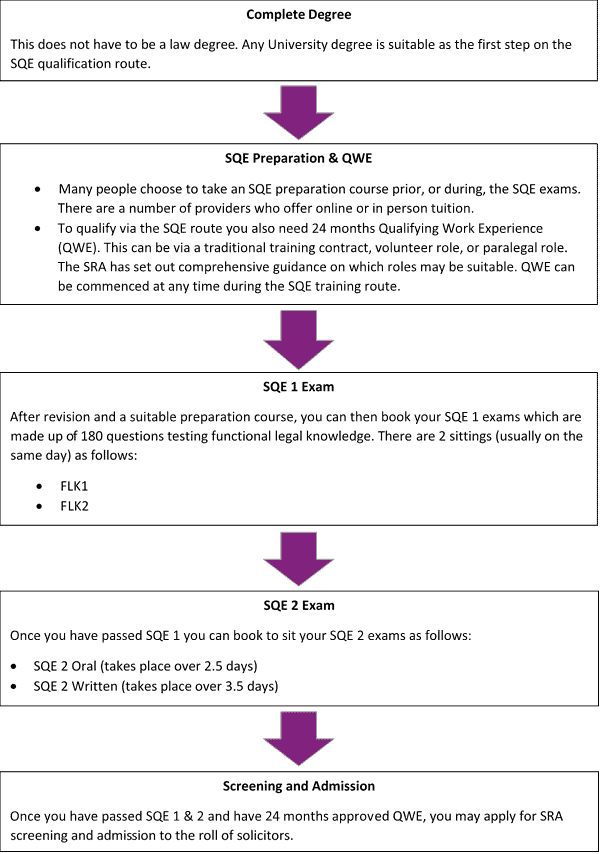
Since 1st September 2022, the SQE has been the new route to solicitor qualification. By the end of 2032, it will replace the LPC as the usual route to qualify as a solicitor in England and Wales. The SQE route comprises of 2 principle elements 1) 24 months of qualifying work experience and 2) passing both the SQE1 (written) and SQE2 (skills based) exams. Below is a summary of the route to qualification via the SQE route.
CILEX (Legacy Route)
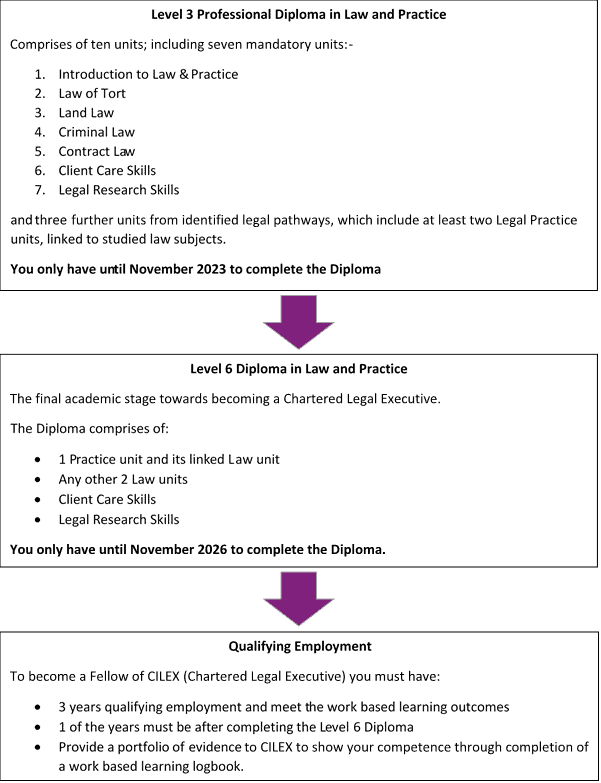
CILEX Level 3 and Level 6 qualifications are being withdrawn on a phased basis. The last opportunity to enter for a CILEX Level 3 exam is June 2023 and the last opportunity to enter for a CILEX Level 6 exam is June 2026. Please note you have to already have started your Level 3 and Level 6 courses to complete the legacy route. If you are thinking of pursuing your training with CILEX as a fresh student, please see below the guidance for the CILEX Professional Qualification.
CILEX (Graduate Route)
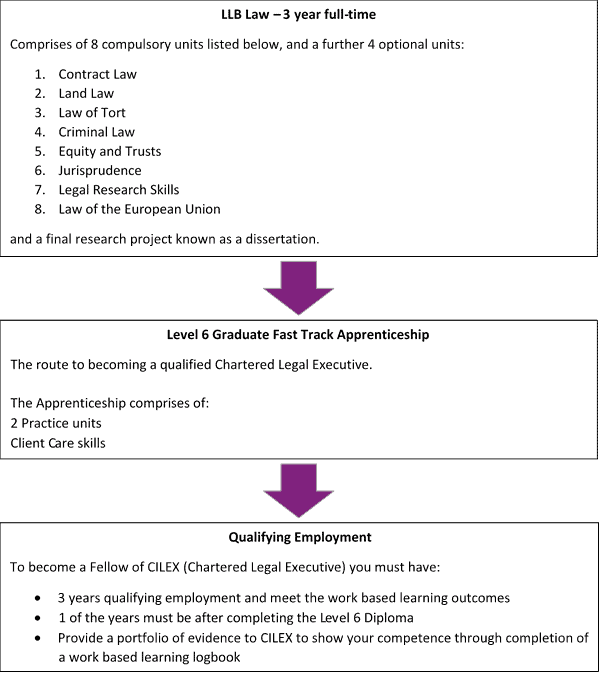
The CILEx Graduate Fast-track Diploma is for law and GDL1 graduates who want to become lawyers without undertaking the Legal Practice Course (LPC) or Bar Professional Training Course (BPTC) routes. training contract or pupillage is required and instead of becoming a solicitor or barrister, graduates qualify and practise as Chartered Legal Executive lawyers.
The Graduate Fast-track Diploma must be completed by June 2026 and is only available to those who have already begun the course.
CILEX (Professional Qualification)
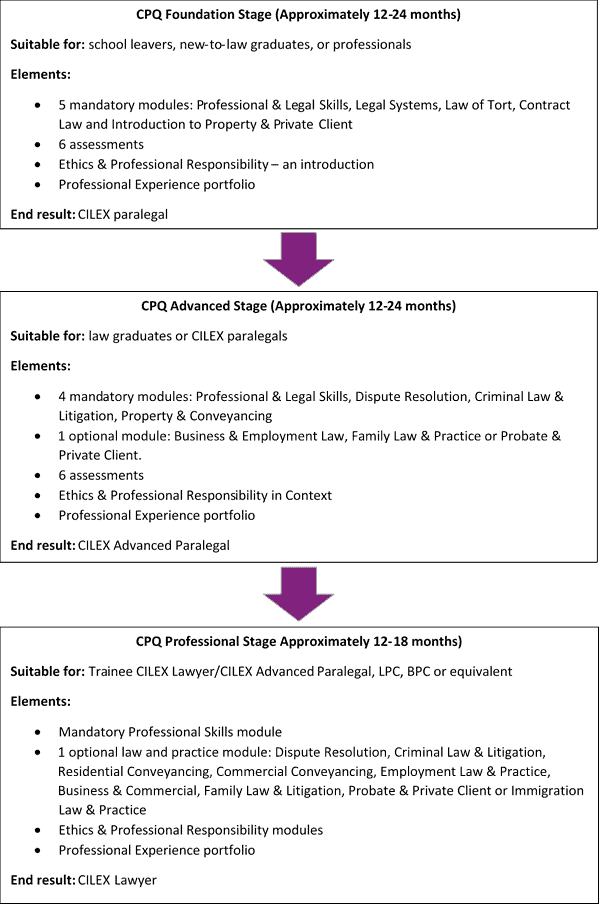
The CILEX Professional Qualification (CPQ) is a new qualification framework that sets new standards in practice-focused training and work-readiness, broadens access to legal careers and develops professionals at all levels. The process is as follows.
Teams at Wilson Browne – What to expect
Commercial Litigation
This team represents clients involved in disputes where there is some sort of corporate involvement, and advise clients on options such as mediation, arbitration, negotiation or litigation.
A trainee in this seat can expect to assist with a broad variety of work, from opening a file right up to a final hearing. Matters are progressed along the way following the Court Directions and CPR and protocols.
Some specific tasks a trainee can expect to undertake in this seat include:
- Speaking with new enquiries;
- Instructing Counsel;
- Drafting witness statements;
- Preparing disclosure;
- Prepare all the standard forms;
- Preparing precedent H/R’s;
- Preparing Schedules of Costs, negotiate settlement with the other party (making WP/Part 36 offers);
- Liaising with the Court;
- Attending hearings
Commercial Property
The Commercial Property team assist clients in a variety of matters relating to land and buildings that are non-residential (so, anything not related to someone’s home). This can include bare land, land to be developed (either for residential homes or non-residential buildings), and retail or commercial buildings.
A trainee in this seat can expect to assist with a wide variety of tasks, and will be encouraged to take on their own caseload to a degree.
Specific tasks that a trainee might undertake in this seat are:
- Assisting other fee earners in the team with complex matters (so shadowing meetings, preparing draft documents, researching points of law, and liaising with the client);
- Acting on lower value or lower complexity matters with supervision (running the file from start to finish where possible), which could include:
- Taking on the new enquiry referral, and calling the client to quote for the work;
- Opening the file and sending the initial client care letter;
- Reviewing the legal title to the land;
- Drafting or reviewing draft documentation;
- Negotiating amendments to draft documentation with the other side’s lawyer;
- Preparing a report to client;
- Agreeing and finalising documentation for signing, and meeting with client to run through the final documents;
- Completing the documentation;
- Attending to post-completion requirements (such as Land Registry registration and SDLT returns).
- Researching and preparing articles for the website; fielding new enquiries; and
- Networking.
Corporate / Commercial
The Corporate Commercial team is involved in a wide range of matters, ranging from transactional work involving the sale and purchase of businesses- to private company matters such as Shareholders Agreements, preparation of Terms and Conditions, or the incorporation of new companies.
Some specific tasks a trainee can expect to undertake include:
- Attending to filings at Companies House;
- Speaking with new enquires, gathering information and arranging calls;
- Looking after the Dataroom (an online database of due diligence information which is often utilised on sale or purchase matters);
- Assisting with the drafting of documents including Share Certificates, Stock Transfer Forms, Board Minutes and Asset/Share Purchase Agreements;
- Attending to file opening procedures, running individual and company AML checks;
- Providing support completion meetings; and,
- Legal research.
Court of Protection
The Court of Protection team makes applications to the Court of Protection in respect of property and affairs or health and welfare. This can include applications to be appointed as a deputy, for a statutory will, for authority to sell a property or to appoint a new trustee.
In addition to this, Wilson Browne Trust Corporation and partners of the firm are appointed as Deputies and Attorneys and the team will then be responsible for managing the day to day running of their financial affairs, this means a lot of client contact and potentially being involved with the same client for a very long time.
We are also able to advise family members on all aspects of care home funding.
The work includes a high level of client contact, but also building relationships with interested parties and working with them to ensure all decisions are in the best interests of the client. You need to be understanding, compassionate and a good listener as well as being organised and forward thinking.
Typical tasks of a Trainee in the Court of Protection team:
- Drafting an application to the Court of Protection to appoint someone as deputy;
- Observing advice meetings or round table meetings;
- Preparing applications to register an Enduring Power of Attorney;
- Making best-interest decisions for our clients;
- Researching relevant points of law;
- Instructing professionals on behalf of our clients;
- Communicating with our clients and adapting this to meet their needs;
- Drafting letters to third parties on behalf of our clients;
- Considering finances and making simple financial decisions on behalf of clients; and,
- General administrative tasks that need to be completed on a daily basis for our clients.
Employment
The Employment team acts for both employers and employees on a range of matters ranging from drafting policies to assisting with a grievance or appeal process. The Employment team can also offer support on Corporate or Commercial Litigation matters and so often work closely with these teams.
Some specific tasks a trainee can expect to undertake include:
- Drafting bespoke contract of employment templates, as well as reviewing of contracts of employment in place, to ensure s1 compliance;
- Consultation calls for employees, offering generalised legal information as well as employment law procedure;
- Drafting and reviewing of employer staff handbooks and stand-alone HR policies;
- Drafting standalone letters for clients wanting assistance with submitting/responding to grievances and/or appeals;
- Running of Tribunal files: starting with submissions of ET1 forms, to preparation for Tribunal Hearings; and,
- Assessing of Settlement Agreements, ensuring that employee’s mandatory minimums are complied with.
Public Law Childcare
Childcare is an advocacy based area of practice. There is a lot of client contact and involves lots of communication and difficult conversations. It can be heart-wrenching and equally rewarding at the same time – a strong stomach also helps!
You have to have the instinct to be nosey and dig down into the intricacies of people’s lives.
Typical day whilst undertaking seat:
- Observing an advocates meeting and court hearings to gain advocacy skills;
- Drafting of legal documents (such as C2’s, consent orders, part 25 applications);
- Preparing briefs for counsel;
- Reviewing threshold documents and the local authority’s evidence (including police disclosure, CCTV and medical records);
- Researching points of law;
- Drafting statements of evidence; and,
- Representing many different clients during the Public Outline Process – identifying appropriate assessments and obtaining the required support to avoid proceedings.
Private Law Family
The Family team deal with all things relating to relationships, whether it concerns children, finances, assets or the actual process of separation and divorce.
General tasks a trainee in the Family Team would be expected to complete:
- Assisting with the divorce process including drafting petitions;
- Shadowing Solicitors in our initial hourly rate appointments;
- Attendance notes from any meetings attended;
- Assisting with to collation of a financial statement (Form E);
- Reviewing financial statements to draft a Questionnaire, with support;
- Assistance with preparation for financial hearings including bundle preparation; preliminary documents including chronology, case summary and statement of issues; assisting with the Brief to Counsel, Shadowing Counsel at Court hearings and preparing attendance notes;
- Drafting children applications (C100 and C1a), with support;
- Assisting with the preparation of Scott Schedules and Witness Statements, with support;
- Drafting articles on relevant matters for business development purposes;
- Assisting with the preparation of Replies to Questionnaires in financial proceedings;
- Enquiring as to Counsel availability and quotations;
- Obtaining quotations for expert reports, for example Chartered Surveyors;
- Assisting with the preparation of a Letter of instructions to an expert, with support;
- Assisting with the preparation of Part 7 and Part 8 TOLATA applications, with support including the preparation of a statements; and,
- Assisting with the preparation of Non-Molestation and Occupation Order applications, with support.
Private Client
Private Client is a non-contentious based area of practice. There is a lot of client contact involving many meetings with clients about sensitive issues. It’s a very varied area of law where you find yourself gaining much experience with carrying out various different tasks. The key to being a successful Private Client Lawyer is being a good listener and showing your clients compassion and empathy with clients. It is not for everyone but when providing clients with good service can be very rewarding.
Typical day whilst undertaking seat:
- Shadowing other members of the team during client meetings and then having a go at the work following the meeting. Once your supervisor has declared you are competent enough you will then be able to conduct your own Will or Lasting Power of Attorney meetings to take instructions and then depending on your qualification route manage the file yourself;
- Drafting of Wills and Lasting Powers of Attorney and simple Grant of Probate applications. Dealing with banks, building societies, investment companies, share dealings, estate agents and other solicitors;
- Registering the death of a deceased client. Attending a deceased’s client’s house to find necessary paperwork and arrange the clearance; and,
- Researching points of law for your supervisor.
Residential Conveyancing
The residential conveyancing team deal with all aspects of the buying or selling of someone’s home.
As a Trainee Solicitor in the Residential Conveyancing department, your role would include:-
- Issuing contract papers;
- Reviewing and responding to enquiries;
- Reporting on search results;
- Reporting on mortgage offers;
- Reviewing contract papers and identifying issues;
- Reporting on title documentation;
- Running your own caseload;
- Assisting with post-completion work;
- Liaising with clients, estate agents, solicitors and mortgage brokers; and,
- Dealing with exchange and completions.